
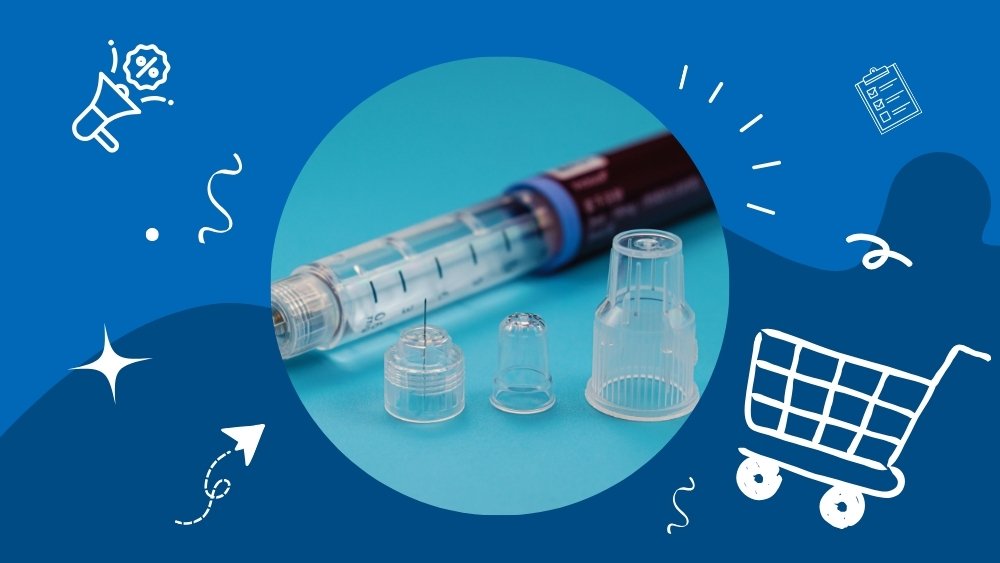
If you've been using Embecta's (formerly BD) Nano™ 2nd Gen pen needles for a while and you're eyeing Sensifine® Plus, the spec sheets look almost identical: 32G, 4mm, printed on both boxes. We put them side by side — same size, same job — to see where they're actually the same and where the day-to-day experience splits.
| Sensifine® Plus | Embecta Nano™ 2nd Gen | |
| Price | $21.99/box | Starts at $69.99/box |
| Number of needles per box | 100ct/box | 100ct/box |
| Gauge / Length | 32G × 4mm | 32G × 4mm |
| Needle tip | 3-bevel | 5-bevel |
| Wall type | Ultra-thin wall | Ultra-thin wall |
| Needle base | Flat base | Flat base, slightly raised tip |
Sensifine® Plus vs. Embecta Nano™ 2nd Gen: What's the Same

Both use ultra-thin wall technology, which is an actual ISO standard for 32G pen needle inner diameter, not just a marketing phrase — it's what lets the full dose flow through without extra thumb pressure, and both needles meet it the same way. On the tip itself, Embecta's Nano 2nd Gen uses a 5-bevel point, while Sensifine Plus sticks with the classic 3-bevel. On paper, that sounds like it should tip the comfort scale toward Embecta. Side by side, though, the actual poke didn't feel meaningfully different between the two — tip geometry matters less here than the spec sheet suggests, and neither needle stood out as sharper or gentler going in.
The Caps: What You Feel Before the Needle Ever Touches Skin

Sensifine Plus's inner needle cap is noticeably wider, which makes it easier to grab and twist off one-handed — useful if you're managing this half-asleep at 6am, in a dim hotel bathroom, or dealing with any reduced grip strength. Embecta Nano 2nd Gen's outer cap, by contrast, is smooth with no ridging or grip texture, so it can slip a little in damp or cold fingers, especially if your hands are already a bit unsteady before an injection. It's a small detail on its own. Stack it across a few thousand injections a year, and it's the kind of thing you start to notice — not on injection #4, but on injection #400.
The Base: Where Sensitive Skin Notices a Difference

Embecta describes the Nano 2nd Gen's base as "contoured," but there's still a small raised point where the needle meets the hub. For most people, that's a non-issue. For anyone with a lower pain threshold, or an injection site that's already a bit worn out, it can register as a faint press right before the needle goes in. Sensifine Plus's hub sits flatter against the skin — of everything we compared, this was the most noticeable structural difference between the two.
So, Is One Actually Better?
For the injection itself, weigh the two evenly — same gauge, same length, same ultra-thin wall flow, a poke that feels about the same either way. The cap and base differences are real, but small enough that you'd likely only notice them after weeks of side-by-side use, and Sensifine Plus edges ahead there.
The biggest gap is reflected in the prices shown in the table above: a 100ct of Sensifine Plus needles costs $21.99 (or possibly less—keep an eye out for discounts on the website), while a 100ct of Embecta Nano 2nd Gen needles costs $69 or more. If your insurance covers the brand you currently use with a low copay, the price difference may not affect your decision—you can simply continue using your current product. However, if you need to pay out of pocket, are switching insurance plans, or are considering the cumulative monthly cost of supplies (especially for users who require multiple injections per day), price is undoubtedly the primary consideration.
Click below to try Sensifine Plus Pen Needles—a more cost-effective choice.

FAQ
Is Embecta the same company as BD?
Yes. Embecta spun off from Becton Dickinson (BD) as its own company, and Nano 2nd Gen is the same product line — some listings still call it "BD Nano 2nd Gen."
Can I switch from Embecta Nano 2nd Gen to Sensifine Plus without changing anything else?
Both are 32G x 4mm and fit the same range of pens, so switching between them doesn't change your dose or your injection technique — just the needle brand in your hand.
Why is there such a big price difference between two needles that perform so similarly?
A lot of it comes down to brand and distribution rather than the needle itself — established brands carry decades of hospital and insurance-formulary relationships into their retail price, while newer brands typically sell through fewer middlemen. It isn't, on its own, a reflection of needle quality.
Does a wider inner cap actually make a difference day to day?
For most people, it's a small convenience rather than a dealbreaker. It matters most if you're injecting one-handed, in low light, or managing any hand dexterity issues.


Leave a comment
All comments are moderated before being published.
This site is protected by hCaptcha and the hCaptcha Privacy Policy and Terms of Service apply.