
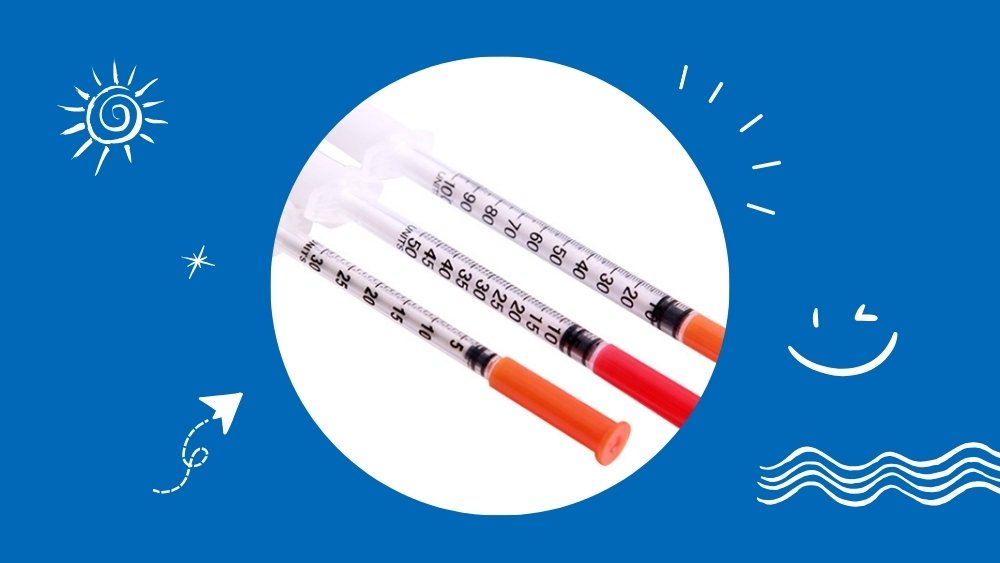
Insulin syringes play an important role in daily insulin administration. Selecting the right insulin syringe can help support accurate dosing and a more comfortable injection experience. When comparing insulin syringes, factors such as syringe capacity, needle gauge, and needle length are worth considering based on individual needs and preferences.
The Sensifine Insulin Syringe is designed with clear graduation markings for easy dose measurement, an ultra-thin needle for smooth injections, and sterile single-use packaging. As with all insulin syringes, users should follow their healthcare provider’s instructions and the prescribed insulin regimen when choosing the most suitable option.
Insulin Syringe Types
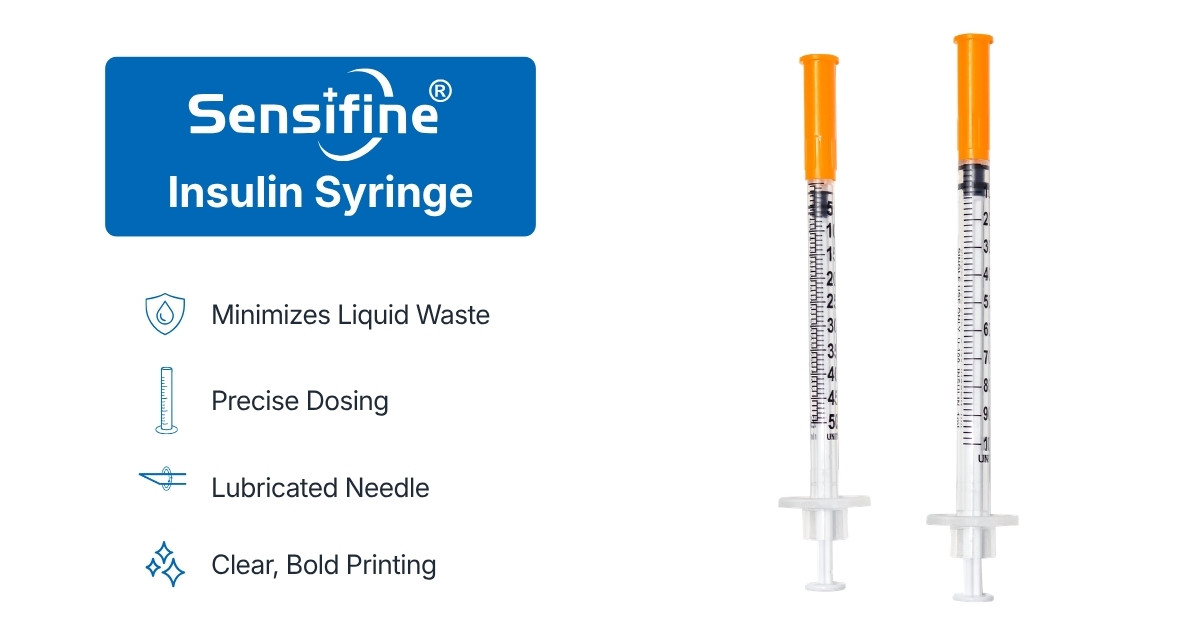
When you begin using insulin syringes, you will see there are different kinds. Each kind fits a certain insulin concentration. Knowing these differences helps you avoid mistakes. It also helps you manage your diabetes safely.
U-100 Insulin Syringes
U-100 insulin syringes are the most common type you will find. These syringes are made for insulin with 100 units in each milliliter. Most people with diabetes use U-100 insulin syringes. They match the standard insulin strength used everywhere. You should always use U-100 insulin syringes with U-100 insulin. This helps you get the right dose every time.
Here is a table to show the main differences between U-100 and U-40 insulin syringes:
|
Syringe Type |
Insulin Concentration |
Usage Recommendations |
|---|---|---|
|
U-100 |
100 units per mL |
Use with U-100 insulin only |
|
U-40 |
40 units per mL |
Use with U-40 insulin only (often for pets) |
U-100 insulin syringes are the global standard for several reasons:
- U-100 insulin is the main strength for both human and analog insulin.
- Older strengths like U-20, U-40, or U-80 caused confusion and mistakes.
- Switching to U-100 insulin syringes made it safer and easier for you and your healthcare team.
U-40 Insulin Syringes
U-40 insulin syringes are made for insulin with 40 units in each milliliter. You will mostly see these syringes used for animals, not people. If you use U-40 insulin, you must use U-40 insulin syringes. Mixing up U-100 and U-40 insulin syringes can cause serious mistakes.
Fixed vs. Detachable Needle Designs
You will also see two main types of syringes based on needle design. Some insulin syringes have a fixed needle that does not come off. Others have a detachable needle that you can remove. Fixed needle designs, like those from Sensifine, lower the risk of leaks. They help you get your full dose. Detachable needle syringes may be used in some cases. Fixed needle syringes are often chosen for daily insulin injections.
When you pick between types of insulin syringes, always check the insulin concentration and needle design. This helps you use your insulin safely and correctly.
Insulin Syringe Sizes
When you choose insulin syringes, you need to know about the different sizes. The size of the syringe affects how much insulin you can draw and how easy it is to measure your dose. You will see syringes with different barrel capacities, such as 0.5 mL and 1 mL. Each size fits a specific dosing need.
0.5 mL Syringe
A 0.5 mL insulin syringe holds up to 50 units of insulin. You may use this size if your dose is between 30 and 50 units. The smaller barrel helps you measure your dose more accurately. You can see the markings clearly, which lowers the chance of mistakes. If your dose is less than 30 units, you might use a 0.3 mL syringe instead.
1 mL Syringe
A 1 mL insulin syringe holds up to 100 units. You may need this size if your dose is over 50 units. The larger barrel lets you draw more insulin in one injection. You avoid having to use multiple syringes. This makes your routine simpler and reduces the risk of dosing errors.
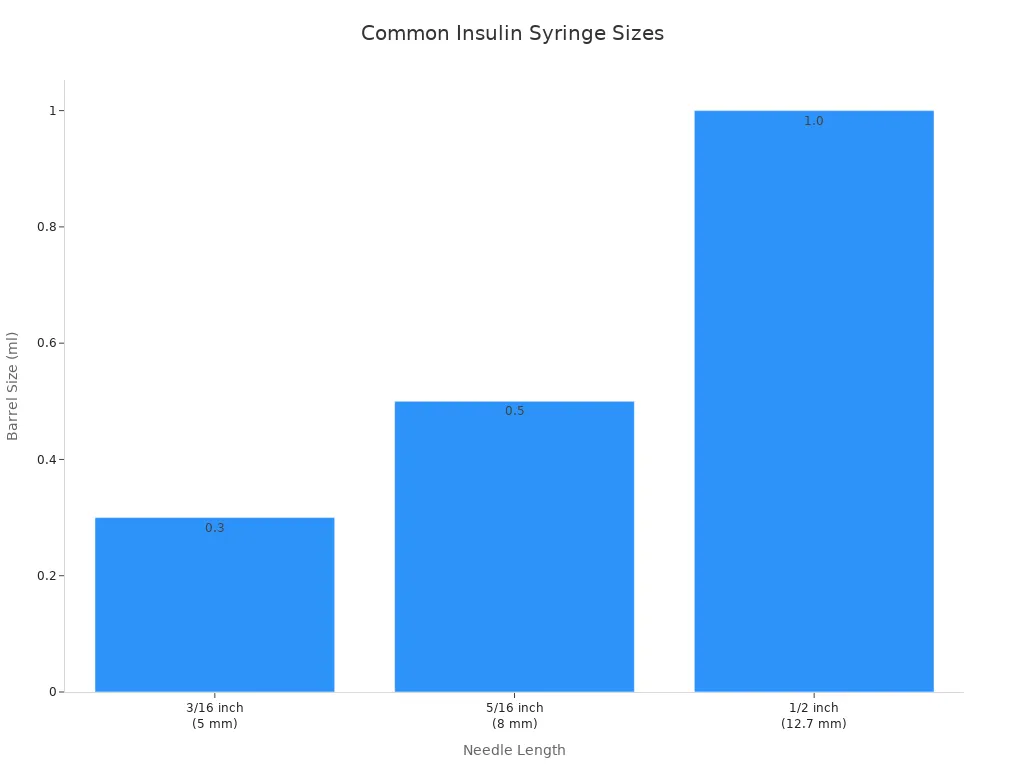
Here is a table showing common insulin syringe sizes and their features:
|
Insulin Needle Length |
Insulin Needle Gauge |
Insulin Barrel Size |
|---|---|---|
|
3/16 inch (5 mm) |
28 |
0.3 ml |
|
5/16 inch (8 mm) |
29,30 |
0.5 ml |
|
½ inch (12.7 mm) |
31 |
1.0 ml |
Reading Unit Markings
You must read the unit markings on the barrel carefully. Each marking shows how much insulin you are drawing. Clear markings help you avoid air bubbles and dosing mistakes. Sensifine insulin syringes have easy-to-read graduation lines. You can check your dose and see if there are any bubbles before you inject.
- Choosing the right insulin syringe size helps you measure your dose accurately.
- If your dose is close to the syringe’s maximum, use a larger size to avoid handling problems.
- A clear barrel lets you see the insulin and check for bubbles.
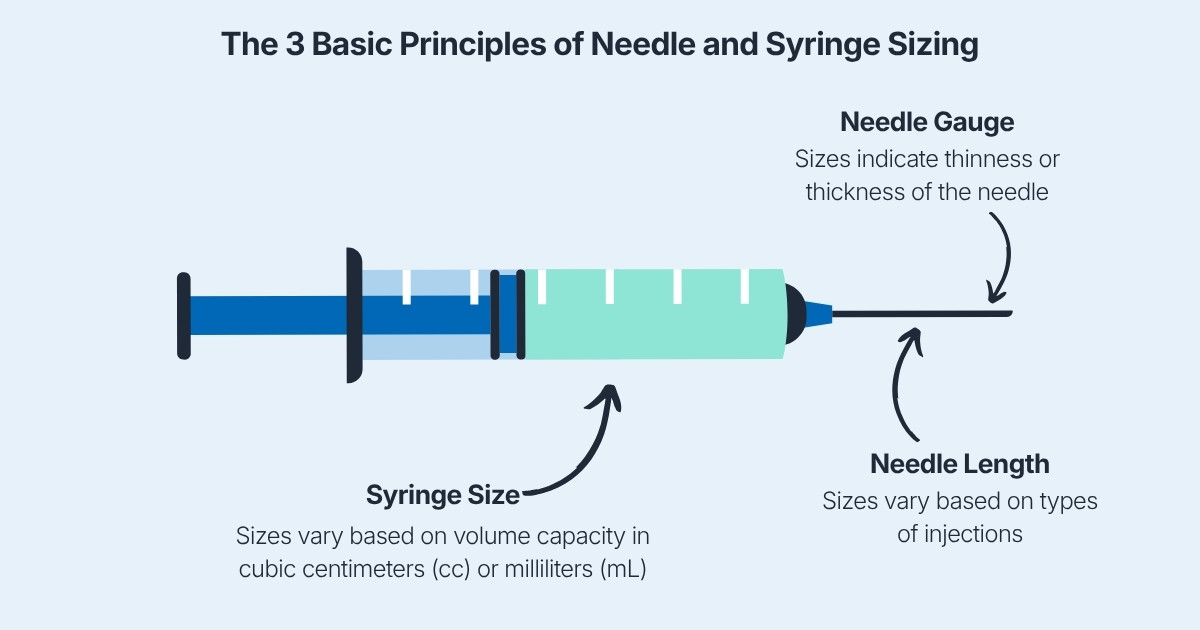
Needle Gauge and Length
Needle Gauge Explained
When you choose an insulin syringe, you need to look at the needle gauge. Needle gauge tells you how thick or thin the needle is. A higher number means a thinner needle. Thinner needles usually cause less pain. You can see the differences in the table below:
|
Gauge Size |
Description |
Pain Level |
Ideal For |
|---|---|---|---|
|
Very fine needle |
Minimal pain |
Children, needle anxiety |
|
|
30 gauge |
Slightly thicker |
Low pain |
Routine subcutaneous injections |
|
29 gauge |
Thicker needle |
More discomfort |
Certain patients |
You may want a thinner needle if you feel nervous about injections or if you give insulin to a child. Thinner needle size can make your daily routine easier.
Needle Length Options
Needle length is also important for insulin delivery. Most insulin syringes come with needle lengths between 8 mm and 12 mm. You should match the needle size to your body type and injection site. Here are some facts about needle length:
- A 8-mm needle works for most people, even if you have a higher or lower body mass index.
- Studies show that insulin absorbs well with both 8-mm and longer needles.
- Shorter needle size helps you avoid injecting into muscle, especially if you have less fat under your skin.
You can use a short needle length for subcutaneous injections in the abdomen. If you have more fat, you may need a longer needle size for proper insulin delivery.
Comfort and Effectiveness
Comfort matters when you use insulin syringes every day. You want to choose a needle size that makes injections less painful and more effective. Smaller gauge needles and shorter needle length can help you stick to your insulin routine.
- Shorter needle size (4-6 mm) works well for subcutaneous injections.
- Longer needle size (6-8 mm) may be needed if you have more fat in the injection area.
- Less pain means you are more likely to take your insulin as prescribed.
Hirsch et al. found that people felt less pain with 4-mm needles than with 5-mm or 8-mm needles.
You should always match the needle size and needle length to your needs. This helps you get the right dose and keeps your injections comfortable.
Insulin Syringe Components
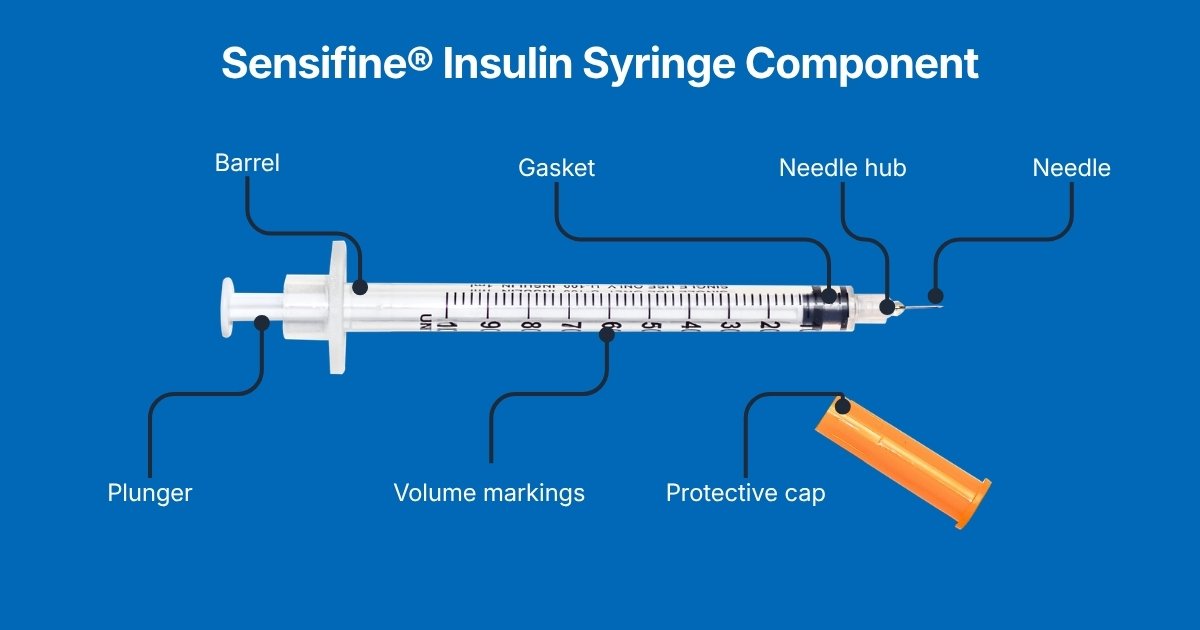
If you know the parts of an insulin syringe, you can use it safely. Each part has a job that helps you get the right amount of insulin.
Barrel and Markings
The barrel is the main part of the syringe. It holds the insulin before you inject it. There are clear lines on the barrel. These lines show how many units of insulin you have. You line up the plunger with the right line. This helps you measure your dose correctly. You can see the lines easily. This lets you pick the right amount of insulin every time. Measuring your dose the right way is important for managing diabetes.
Tip: Always look at the lines before you draw insulin. This step helps you avoid mistakes with your dose.
Needle Features
The needle is on one end of the syringe. It is thin and short. This makes injections hurt less. The needle’s fine shape lets insulin go into your body smoothly. Short needles help you avoid hitting muscle. This is important for insulin to work well. Many syringes, like Sensifine, use ultra-thin needles. These needles make injections easier for you.
|
Needle Feature |
Benefit |
|---|---|
|
Thin needle |
Less pain |
|
Short length |
Better for subcutaneous injection |
|
Sharp tip |
Smooth entry |
Plunger Function
The plunger sits inside the barrel and moves up and down. When you pull it back, you fill the barrel with insulin. When you push it forward, you give yourself the insulin. The plunger makes a seal. This keeps the insulin clean and stops leaks. The seal also helps you control how fast and how much insulin you inject. Using the plunger the right way helps you get your full dose every time.
If you know the parts of the insulin syringe, you can handle injections with confidence. The barrel, needle, and plunger all work together. They help you give insulin safely and accurately.
Selecting Insulin Syringe
Picking the right insulin syringe keeps you safe. It helps you take care of your diabetes. You need to match the syringe to your insulin type. You also need to think about your dose and what feels comfortable. This section explains what to check when you pick an insulin syringe.
Matching Syringe to Dose
You should always use a syringe that fits your dose. The right size helps you measure insulin the right way. This lowers the chance of mistakes. Here are some easy tips:
- Use a 0.3 mL syringe if your dose is less than 30 units. This size makes it simple to see and measure small amounts.
- Pick a 0.5 mL syringe for doses from 30 to 50 units.
- Choose a 1 mL syringe if your dose is more than 50 units. This size lets you draw more insulin at once.
- Find syringes with clear lines. These lines help you see the units and avoid errors.
- If you have trouble seeing or holding things, pick a syringe with big numbers or a grip that is easy to hold.
- Always make sure your syringe matches your insulin concentration. For example, use a U100 insulin syringe with U100 insulin. Using the wrong syringe can cause big mistakes.
Tip: Ask your healthcare provider if you are not sure which syringe size is right for you. They can help you pick the best one for your needs.
Choosing Needle Gauge and Length
Needle gauge and length change how comfortable your shot feels. They also affect how well the insulin goes into your body. You want a needle that fits your age, body, and where you inject.
- Higher gauge numbers mean the needle is thinner. For insulin shots, gauges from 31 to 28 are common. Thinner needles can hurt less.
- Needle length for insulin syringes is usually between 3/8 inch and 1/2 inch. Shorter needles work for most people. They help you avoid hitting muscle.
- If you inject into a spot with more fat, you might need a longer needle.
- Kids and people who are thin often do well with short, thin needles.
|
Gauge |
Needle Thickness |
Typical Use |
|---|---|---|
|
31 |
Very thin |
Children, sensitive users |
|
30 |
Thin |
Most adults |
|
29-28 |
Thicker |
Adults with more body fat |
Note: Always use the needle length and gauge your healthcare provider suggests. They will think about your age, your body, and where you inject insulin.
Considering Injection Site and Patient Factors
Think about where you inject insulin and what you need. The right syringe and needle make shots easier and safer.
- Abdomen, thigh, and upper arm are common places for shots. Short needles work well in these spots.
- If you give yourself shots a lot, a thin needle can make it feel better.
- Kids, older people, or people with less body fat may need short needles.
- If you have trouble seeing or using your hands, pick syringes with clear lines and grips that are easy to hold.
- Always match your syringe to your insulin. Using the wrong syringe can make you take too much or too little insulin.
Remember: Always check your insulin type and syringe before every shot. This step helps you avoid mistakes and keeps you safe.
Picking the right insulin syringe for your dose, comfort, and where you inject helps you manage diabetes with confidence. Always ask your healthcare provider for advice that fits you.
Insulin Syringe Usage Techniques
Preparing for Injection
You must get your insulin syringe ready before each shot. Follow these steps to make your injection safe and correct:
- Wash your hands with soap and water. Dry your hands well.
- Look at the insulin bottle label. Make sure it is the right insulin.
- Check the insulin. If you see clumps or bits, throw it away.
- Roll intermediate-acting insulin between your hands to mix it. Do not shake it.
- Clean the top of the insulin bottle with an alcohol wipe. Let it dry.
- Pull air into the syringe. The amount should match your insulin dose.
- Push the air into the bottle. Draw the right amount of insulin into the syringe.
- Look for air bubbles in the syringe. Remove them if you see any.
- Make sure you have the correct dose in the syringe before you inject.
Tip: Always use a new insulin syringe for every shot. Never share needles with anyone.
Injection Sites and Rotation
You can pick from different places for your shot. Common spots are the upper outer arms, abdomen, buttocks, and upper outer thighs. Split your chosen spot into sections. Use one section each week and change where you inject within that section. Keep shots at least a finger’s width apart.
- Changing your shot spot stops skin problems like lipodystrophy. This problem can slow insulin absorption and make your skin uneven.
- Rotating your shot spot helps keep your blood sugar steady.
- Keep about an inch between each shot spot.
Injection Angle and Skin Pinching
Put the needle straight into your skin at a 90-degree angle. Pinch a bit of skin before you inject. This helps you avoid hitting muscle and makes sure insulin goes into the fat.
- Pinching your skin helps insulin go in the right way.
- Wait for 10 seconds after you inject. This lets the insulin absorb.
- The abdomen absorbs insulin fastest, but all the suggested spots work well.
Drawing and Injecting Insulin
Check your insulin before you pull it into the syringe. Make sure it is clear and does not have floaters or strange color. Pick a spot with at least half an inch of pinchable fat. Clean the spot with an alcohol swab.
- Put the needle in at a 90-degree angle.
- Push the plunger slowly until all the insulin is in.
- Throw away the used insulin syringe safely.
Note: Diabetic patients must use careful technique when giving themselves shots. Using insulin syringes the right way helps you stay safe.
Insulin Syringe Safety Tips
Single-Use Only
You must use each insulin syringe just one time. Using a syringe again can cause health problems and pain. Here are some reasons to always use a new syringe for every shot:
- Bacteria can grow on the needle after you use it once. This can make you get an infection.
- Each time you use the needle, it gets less sharp. A dull needle can make shots hurt more.
- Using syringes again can make your insulin not work as well. This can make it harder to control your diabetes.
Always pick a new, clean syringe for every shot. This easy step keeps you safe and helps you avoid mistakes.
Storage and Handling
Storing and handling your insulin syringe the right way keeps it clean and safe. You should:
- Use the syringe right after you open the package.
- Do not leave the syringe out of the package for more than 15 minutes.
- Do not put syringes on dirty surfaces.
- Throw away any syringe that touches something not clean.
- Check the package before you use it. Make sure it is closed and not old.
- Always use a new syringe for every shot.
- These steps help stop infections and keep your shots safe.
Safe Disposal
Throwing away used insulin syringes the right way keeps you and others safe. It also helps keep the earth clean. You should:
- Do not put the cap back on the needle after you use it. This helps stop needle sticks.
- Put the used syringe right into a strong sharps container.
- Close the sharps container lid after every use.
- When the container is almost full, close it tight and follow your local rules to throw it away.
If you do not have a sharps container, you can use a thick plastic bottle, like a laundry soap bottle. Always ask your local health department how to throw away sharps the right way in your area.
Teach your family how to throw away syringes safely. This keeps everyone safe from getting hurt.
By following these safety tips, you keep yourself and others safe. You also make sure your diabetes care works well.
Common Mistakes with Insulin Syringes
Mistakes with insulin syringes can make diabetes harder to manage. You can stop these errors by learning about them and using safe steps.
Wrong Syringe Type or Size
You might pick the wrong syringe if you do not check your dose or insulin strength. Using a syringe that does not fit your needs can cause dosing mistakes. Here are some common errors:
- Using a big syringe (1.0 mL) for small doses can make you draw too much insulin.
- Picking a small syringe (0.3 mL) for big doses may mean you need more than one shot.
- Not matching the needle gauge and length to your body or injection spot can make shots hurt.
Tip: Always check the barrel size and needle before each shot. Pick a syringe that fits your dose and body.
Incorrect Dosing
Incorrect dosing happens when you draw too much or too little insulin. This mistake can cause serious health problems. Studies show most wrong dose mistakes are overdoses of ten times or more. For example, you might inject 100 units instead of 10 units if you use a 1-mL syringe and do not check the markings. These mistakes can cause dangerous drops in blood sugar and may need emergency help.
Not Rotating Sites
You need to change where you inject to keep your skin healthy and help insulin work well. If you use the same spot every time, you may get lipohypertrophy. This is when fat builds up under your skin. It can make insulin work slowly and not as expected.
- Changing spots helps insulin work better.
- Lipohypertrophy can cause lumps and change how insulin works.
- Extra fat in injection spots can slow absorption.
Injecting Cold Insulin
Injecting cold insulin can hurt and feel uncomfortable. Cold insulin is safe, but it feels worse and may not absorb as well. Cold insulin is thicker and can make tissue tight and slow absorption. Letting insulin warm up to room temperature before your shot can help you feel better.
- Cold insulin makes shots hurt more.
- Tight tissue slows absorption.
- Room temperature insulin feels better.
You can manage diabetes better by avoiding these mistakes. Always check your syringe, dose, injection spot, and insulin temperature before every shot.
Key Takeaways for Diabetes Management
Best Practices Summary
You can manage diabetes better by following safe steps for insulin shots. These steps help you stay healthy and make your treatment work well:
- Pick an insulin syringe that fits your dose and needs.
- Always use a new, clean syringe for each shot.
- Plan where you give your shots to help insulin work and keep skin healthy.
- Check your dose before every injection to avoid mistakes.
- Throw away used syringes safely to protect yourself and others.
- Be careful with sharps to help the environment.
Sensifine insulin syringes have clear lines, thin needles, and single-use packs. These features help you follow safe steps and keep your diabetes under control.
Education and Training
Learning how to use insulin syringes the right way helps you manage diabetes. You should join training sessions and ask questions if you need help. Ongoing learning helps you get better at using syringes and learn about new tools. The teach-back method lets you show what you know, which helps you remember the steps. Personalized lessons help you stick to your plan and reach your blood sugar goals.
Consulting Healthcare Providers
Your healthcare provider is important for your diabetes care. You should go to training and skill checks. Providers give you materials and answer your questions. They also tell you about new products and support groups. Working with your provider helps you use insulin syringes correctly and keeps your diabetes care on track. Sensifine works with healthcare teams to give you safe options for daily care.
Remember: Good diabetes care depends on picking the right syringe, using it the right way, and staying safe. Sensifine supports you every step of the way.
Picking the right insulin syringe and needle gauge helps you get the correct dose and feel less pain. Studies show that using shorter needles hurts less and does not change your blood sugar control. You should always use a syringe that matches your insulin concentration and follow safe steps. Sensifine gives you clean and trusted insulin syringes for everyday use. Keep learning and talk to your doctor so you can manage your diabetes with confidence.
FAQ
How do you choose the right insulin syringe size?
Pick a syringe size that matches your insulin dose. Small syringes are best for small doses. Big syringes are for bigger doses. Always look at the unit lines before you draw insulin.
Can you reuse an insulin syringe?
Never use an insulin syringe more than once. A new syringe each time stops infection. It also makes your shots feel better.
What does needle gauge mean?
Needle gauge tells you how thick or thin the needle is. A higher number means the needle is thinner. Thinner needles usually hurt less when you get a shot.
Where should you inject insulin?
You put insulin into fat under your skin. Good spots are your belly, thigh, or upper arm. Change where you inject to keep your skin healthy and help insulin work better.
Disclaimer: This article is for informational purposes only and does not constitute medical advice. Be sure to consult a qualified healthcare professional before using any product!
References
- Frid AH, et al. New Insulin Delivery Recommendations. Mayo Clinic Proceedings. 2016;91(9):1231–1255.
- Patton SR, Eder S, Schwab J, Sisson CM. Survey of insulin site rotation in youth with type 1 diabetes mellitus. J Pediatr Health Care. 2010 Nov-Dec;24(6):365-71. doi: 10.1016/j.pedhc.2009.11.002. Epub 2010 Jan 6. PMID: 20971411; PMCID: PMC3298887.
- Kesavadev, J., Saboo, B., Krishna, M. B., & Krishnan, G. (2020). Evolution of insulin delivery devices: from syringes, pens, and pumps to diy artificial pancreas. Diabetes Therapy, 11(6), 1251-1269. https://doi.org/10.1007/s13300-020-00831-z
- Houlden R, Ross S, Harris S, et al. Treatment satisfaction and quality of life using an early insulinization strategy with insulin glargine compared to an adjusted oral therapy in the management of type 2 diabetes: the Canadian IN-SIGHT study. Diabetes Res Clin Pract. 2007;78(2):254-258.
- ISMP's List of High Alert Medications. The Institute for Safe Medication Practices. www .ismp.org/tools/highalertmedications .pdf. Published 2014. Accessed November 22, 2016.
- American Diabetes Association. Position statement: Continuous subcutaneous insulin infusion. Diabetes Care. 2004;27 Suppl 1:S110.
- Berger M, Halban P, Assal J, et al. Pharmacokinetics of subcutaneously injected tritiated insulin: effects of exercise. Diabetes. 1979;28 Suppl 1:53-57.
- Misnikova IV, Gubkina VA, Lakeeva TS, Dreval AV. A randomized controlled trial to assess the impact of proper insulin injection technique training on glycemic control. Diabetes Ther. 2017;8:1309-1318.
- Bari B, Corbeil MA, Farooqui H, et al. Insulin injection practices in a population of Canadians with diabetes: an observational study. Diabetes Ther. 2020;11:2595-2609.
- Frid AH, Kreugel G, Grassi G, et al. New insulin delivery recommendations. In: Mayo Clinic Proceedings. Vol 91. Elsevier; 2016:1231-1255.
- Blanco M, Hernández MT, Strauss KW, Amaya M. Prevalence and risk factors of lipohypertrophy in insulin-injecting patients with diabetes. Diabetes Metab. 2013;39(5):445-453.
- Taussig JA, Weinstein B, Burris S, Jones TS. Syringe laws and pharmacy regulations are structural constraints on HIV prevention in the US. AIDS. 2000;14 Suppl 1:S47-51.
- 2007 Guideline for Isolation Precautions: Preventing Transmission of Infectious Agents in Healthcare Settings. Atlanta, GA: U.S. Department of Health and Human Services and the Centers for Disease Control and Prevention. www.cdc.gov/hicpac/2007IP/2007isolationPrecautions.html. Updated 2010. Accessed November 22, 2016.
- Pisano M. Overview of insulin and non-insulin delivery devices in the treatment of diabetes. P T. 2014;39(12):866-876.
- Do's and Don'ts: Safe Disposal of Needles and Other Sharps Used At Home, AT Work, or While Traveling. U.S. Food and Drug Administration. http://www.safeneedledisposal.org/wp-content/uploads/2015/07/sharps_dos-and-donts.pdf. Published 2015. Accessed October 22, 2016.
- Johansson UB, Amsberg S, Hannerz L, et al. Impaired absorption of insulin aspart from lipohypertrophic injection sites. Diabetes Care. 2005;28(8):2025-2027.
- Kaplan EH, O'Keefe E. Let the needles do the talking! Evaluating the New Haven needle exchange. Interfaces. 1993;23(1):7-26.
- Peyrot M, Barnett AH, Meneghini LF, Schumm-Draeger PM. Insulin adherence behaviours and barriers in the multinational Global Attitudes of Patients and Physicians in Insulin Therapy study. Diabet Med. 2012;29(5):682-689.


Leave a comment
All comments are moderated before being published.
This site is protected by hCaptcha and the hCaptcha Privacy Policy and Terms of Service apply.