

What Is the Medicare GLP-1 Bridge Program?
Simply put, the Medicare GLP-1 Bridge Program is a temporary pilot program launched by CMS. The program allows eligible Part D beneficiaries to access certain FDA-approved weight-loss medications for a flat monthly fee of $50. The program is designed to further promote access to obesity treatment while the government evaluates long-term insurance policies. The Bridge Program begins on July 1, 2026, and runs through December 31, 2027 [1],[2].
What Does the Program Cover—and What Doesn't It Cover?
To sum it up in one sentence: This program is a “green fast-track”—it covers only the weight-loss medications on the list (Wegovy, Zepbound KwikPen, and Foundayo) and offers a flat-rate discount of $50 only to patients with obesity and its complications. It does not cover other conditions, other medications, or allow the savings to be applied toward regular health insurance coverage.
For more details, be sure to visit the CMS and Medicare GLP-1 Bridge pages to review the policy details.
Why Injection Supplies Matter for Long-Term GLP-1 Therapy
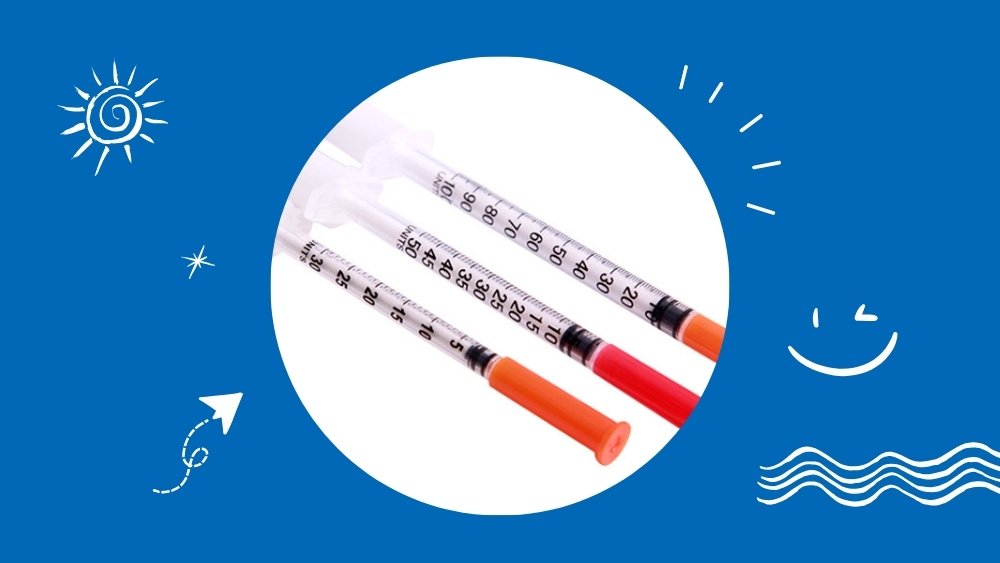
People often focus all their attention on that expensive “solution.” But in reality, injection supplies—such as disposable needles, alcohol swabs, sharps containers [3], and so on—are the “hidden pillars” that determine whether treatment can proceed safely, painlessly, and continuously. Take the Zepbound KwikPen as an example: this device uses compatible disposable needles, yet Lilly does not include needles with the device [4].

To put it figuratively, if we compare GLP-1 to a high-performance car, then the injection supplies are its tires. To ensure this powerhouse performs as intended, you need to pay close attention to the entire injection process at all times to guarantee precision and reliability.
-
Pay Attention to Needle Sizes
GLP-1 is a subcutaneous injection medication that must be injected precisely into the fat layer beneath the skin, rather than into the muscle layer or the surface layer of the skin. If the needle is too short, the medication may remain in the epidermis, causing localized redness, swelling, and nodules, and failing to be absorbed; if the needle is too long, it is likely to penetrate the muscle, leading to rapid absorption of the medication and resulting in adverse effects. For adults, ultra-fine needles measuring 4 mm to 6 mm are the preferred choice [5].
-
Maintain long-term management
These plans typically last for several months or years (depending on the plan your healthcare provider prescribes), and your comfort and confidence in self-injecting may affect the final results [6].
Ways to Avoid Interruptions in Your Injection Routine
- Understand your Medicare and supplemental coverage.
- Keep an emergency supply of pen needles.
- Refill supplies before running low.
- Choose reliable diabetes supplies from trusted providers.
How Sensifine Plus Pen Needles Fit Into a Consistent Injection Routine
Sensifine manufactures and sells diabetes supplies, including disposable sterile needles. It is not affiliated with CMS, but its Sensifine Plus Pen Needles line has long been a favorite among many consumers.
- Compatible with many commonly used injection pens.
- Designed for comfortable daily injections.
- Available as part of routine diabetes supplies planning.

Final Thoughts
The Medicare GLP-1 Bridge Program addresses medication accessibility; however, pens and needles are classified as medical device supplies, and their codes cannot be entered into the program’s billing system. Therefore, you cannot “bundle” the medication and needles together under this program. If your Medicare GLP-1 Bridge Program prescription medication is Zepbound KwikPen, you’ll need to manage your injection supplies, plan ahead, and minimize the risk of a disruption in your prescription coverage.
Sources
[1] CMS, Medicare GLP-1 Bridge
[2] CMS, Information for Part D Plans
[3] FDA, Sharps Disposal Containers
[4] Eli Lilly ZEPBOUND KwikPen Instructions for Use
[5] Rini C, Roberts BC, Morel D, et al. Evaluating the impact of human factors and pen needle design on insulin pen injection. J Diabetes Sci Technol. 2019;13(3):533-545.
[6] Peyrot M. Rubin R. Lauritzen T. Skovlund SE. Snoeck FJ. Matthews DR. Landgraf R. Kleinebreil L. Resistance to insulin therapy among patients and providers: results of the cross-national Diabetes Attitudes, Wishes and Needs (DAWN) study. Diabetes Care. 2005;28:2673–2679. doi: 10.2337/diacare.28.11.2673.

Leave a comment
All comments are moderated before being published.
This site is protected by hCaptcha and the hCaptcha Privacy Policy and Terms of Service apply.